The starting block is the foundation of every competitive swimming race. A strong, explosive start can make the difference between winning and falling behind. Proper technique on the starting block allows swimmers to maximize propulsion, streamline efficiently, and enter the water with minimal resistance. Elite swimmers spend significant time perfecting their starting block skills because it directly impacts overall performance.
A successful start begins with body positioning. Swimmers must balance power and stability, placing their feet securely on the block—either in a track start or a grab start—while keeping their weight slightly forward. Engaging the core and maintaining a low center of gravity helps generate greater force at the moment of takeoff. Reaction time is another crucial component. The ability to respond instantly to the starting signal can shave valuable fractions of a second off the overall race time.
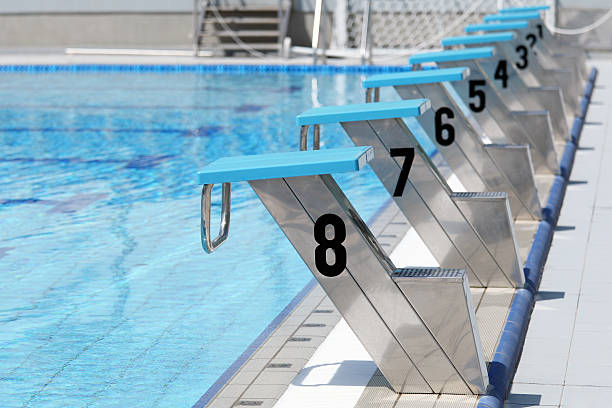
- Proper stance and foot placement optimize power and balance.
- Strong leg drive generates maximum speed into the water.
- Reduces resistance and enhances glide efficiency.
- Quick response to the start signal improves race performance.
The start begins with proper positioning on the block. Feet placement, balance, and crouch angle determine how much force can be generated during the push-off. The arms play a crucial role in maintaining stability and initiating forward momentum. A well-timed dive, combined with a strong push, allows the swimmer to enter the water in a streamlined position, reducing drag and increasing speed.
Reaction time is equally important. Swimmers must respond instantly to the starting signal, as milliseconds can determine race outcomes. Practicing starts repeatedly builds muscle memory and confidence, leading to consistent performance under pressure.